I’ve seen it.
The more you look the more you find, it’s all around you all the time.
The community, the progress, the innovation, and the potential.
It might not be a song by Olivia Dean, but it is in the UK.
Creative sustainable businesses, sustainable communities, organisations for impact, all backed by local government and impact investors.
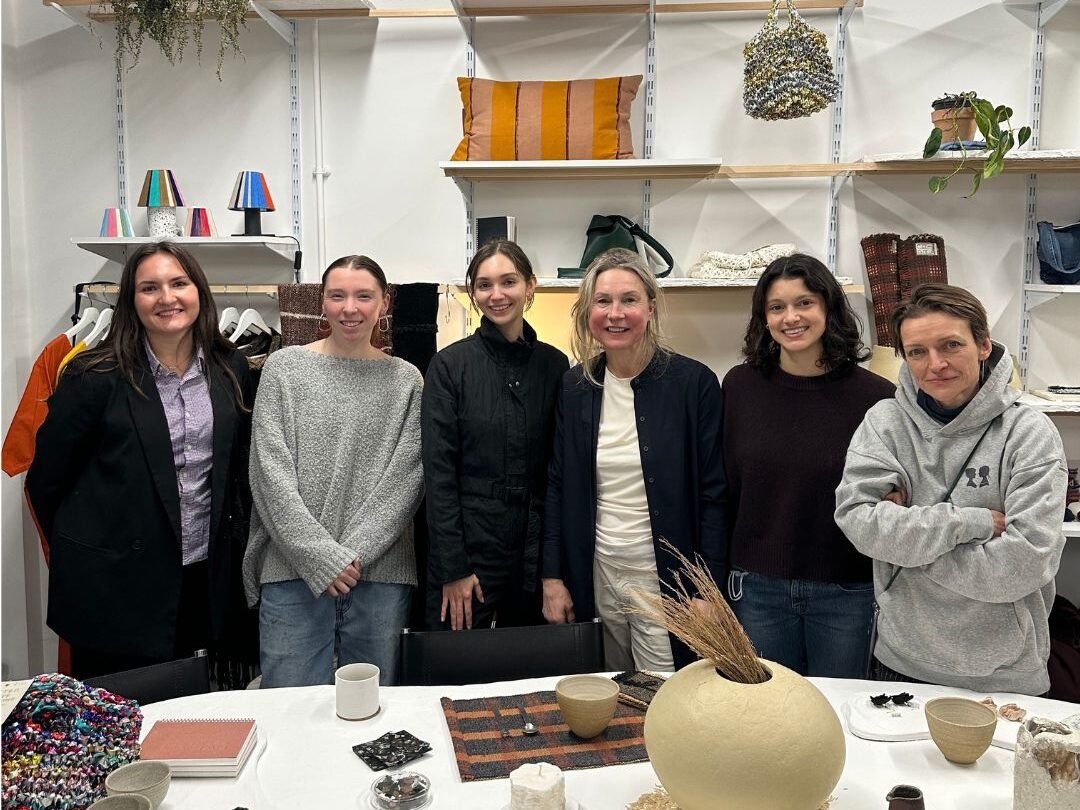
For my recent visit to FibreLab, the award-winning textile recycling start-up based in East London, I accidentally arrived two hours early to their textile recycling workshop, and it turned out to be a beautiful change of events in disguise.
Kae, founder of FibreLab, set me up in the co-working space with a hot cup of tea – an area part of The Trampery, a social enterprise set up to support sustainable and circular creatives. Talking through the concept with Kae, it was evident the local government and impact investors truly believe in the positive change FibreLab is creating, along with the other entrepreneurs in the area.
The Trampery itself, with multiple locations, consists of hubs of studios and shared spaces these start-ups can rent, the costs subsidised through the support of the Mayor of London, Southwark and Hackney Councils, the Greater London Authority, Peabody, and the London Legacy Development Corporation.
The space has created opportunities for these like-minded individuals and teams to connect, collaborate and build a community. With the costs of renting and setting up studio spaces being a huge barrier for start-ups to get up and running, Australia could certainly learn from this kind of set-up to support our local creatives.
Lydia Bolton happened to be in the space making some crumpets – what a way to meet such an influential leader in sustainable design and creative reworking. It was fascinating to chat to her about her own upcycling and the workshops she runs for the public. Just another bonus of The Trampery – shared spaces to host workshops to help re-educate the community on the impact of their choices and how to care for and creatively upcycle items they already own.
Best believe I returned to FibreLab on time for their workshop, full of inspiration and buzzing to hear from the other attendees. Kae took us through the FibreLab process of paper making from textiles – PaperTex, their circular solution for, “scrap that cannot be upcycled or used in any other way and would otherwise be incinerated or put in landfill,” (FibreLab 2026). The paper created, made from natural fibres, can continually be recycled with mainstream paper.
FibreLab also creates other items such as coasters, tables, and chairs with mixed and synthetic fabric scraps, bound with biomaterial or under pressure. Their creative solutions are on display as you walk into their space, allowing you to experience the full range of their innovations. My absolute favourite was the lamp made from waste textiles and oyster shells in collaboration with local restaurants. Alongside FibreLab’s products you will also find others made from unconventional materials by more sustainable makers.
Offering a glimpse into the FibreLab processes, the upcycling workshop was so insightful and inspiring. It was an absolute joy to be in a room amongst other sustainable creatives, knowing the space was built for community and collaboration, supported by people who believe in the brilliant ideas born here.
If you’d like to learn more about FibreLab or attend one of their upcoming workshops, find more information through their website fibrelab.co.uk.
Madelyn Sumner, March 2026